
Water Stain Spreading on the Ceiling or Wall? How to Find the Source Fast
July 20, 2026
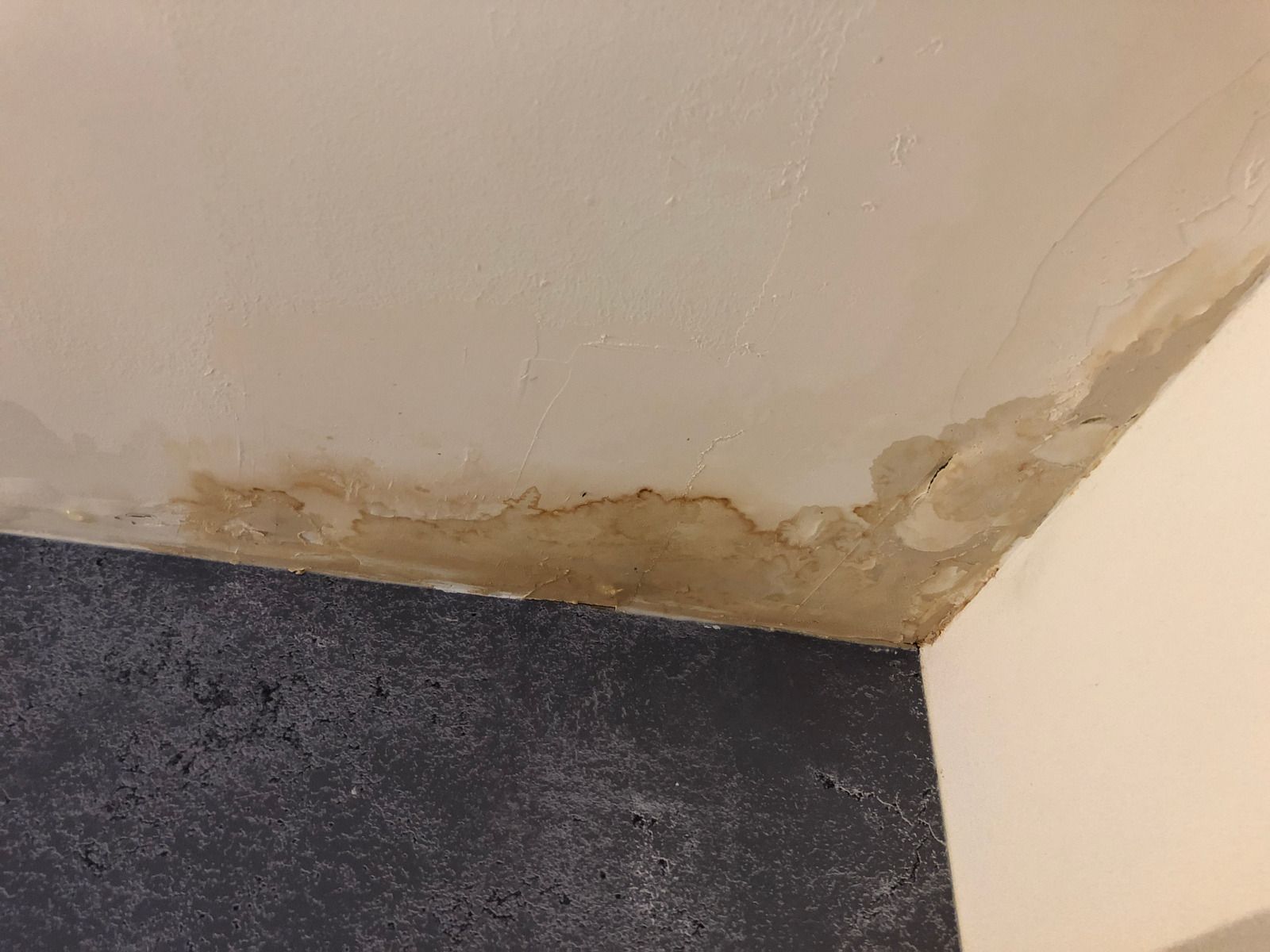
Quick Answer: A spreading water stain means water is still moving through your home, so the goal is to find and stop the source, not to paint over the mark. Start by noting what sits above the stain, since water runs along framing and pipes before it shows itself, then watch whether the stain is actively growing or has dried and stopped. Because the stain forms at the lowest point the water reaches, the real leak is often several feet away from what you see. If the outline keeps expanding or you cannot pin down where it starts, professional moisture mapping can locate the source without opening up the whole ceiling.
You walk through the hallway one morning and notice a faint brown ring on the ceiling that was not there last week. By the afternoon it looks a little bigger, the edges a little darker. Maybe it is on a wall instead, a soft discolored patch spreading down from the corner. Either way, the question hits fast: where is the water coming from, and how bad is it behind the surface you can see.
A spreading stain is not a cosmetic problem waiting for a coat of paint. It is a sign that water is actively finding a path through your home, and every hour that path stays open, it soaks more framing, insulation, and drywall. The good news is that a stain is also a clue. Read it correctly and you can narrow down the source quickly, which is the difference between a small repair and a wall that has to come out. Here is how to trace it.
How to Trace It Yourself, Step by Step
You can do real detective work before anyone opens a wall. The idea is to narrow the search area, not to guarantee a fix.
Look directly above, then uphill
Get into the attic or room above the stain with a flashlight and inspect the framing, insulation, and subfloor for dark, damp wood. Follow any wet trail toward its high point, because water runs downhill to the stain from where it entered.
Match the timing to a source
Pay attention to when the stain grows. Worse only during or after rain points to the roof. Worse whenever someone runs a specific fixture points to that drain. Growing steadily around the clock points to a pressurized supply line always leaking.
Run a controlled test
If you suspect a particular bathroom, use only that shower for a day and watch the stain, then isolate the toilet or sink. Turning individual fixtures on and off while a second person watches can reveal the exact source faster than guessing.
Feel and smell the area
A genuinely wet ceiling feels cool, soft, or spongy and may sag slightly. A musty, damp odor near the stain tells you materials behind the surface have been holding moisture, even if the face looks only lightly marked from below.
How the Pros Pinpoint a Hidden Leak
When the source stays hidden or the stain covers ground, restoration crews trade guesswork for instruments. This is where the search stops being about opening walls at random.
Moisture meters read what is wet inside the material
A pin or pinless meter pressed to the drywall, framing, or flooring reports the actual moisture content of the material, not just the surface. Crews map elevated moisture readings across a ceiling or wall to draw the outline of where water has actually traveled, which frequently extends well past the visible stain.
Thermal imaging reveals the temperature patterns water leaves behind
A thermal camera cannot literally see water inside a wall, but wet material holds and releases heat differently than dry material, so evaporating moisture shows up as cooler patterns and shapes. A trained eye reads those shapes, then confirms every suspected spot with a moisture meter, since a cool area is not proof of water on its own.
Following the map back to the origin
By combining the moisture map with the thermal patterns and the plumbing and roof layout, a crew traces the wet path back to its high point and opens only the small area that needs it. That is how a hidden source gets found and fixed with one clean cut instead of a torn-up ceiling.
WARNING: Do not walk into standing water in a room with wet outlets, power strips, or appliances until the breaker for that area is off. Water and electricity together create a real shock and electrocution risk.
Frequently Asked Questions
Does a spreading water stain always mean an active leak?
A stain that is still growing almost always means water is still arriving. One that appeared once, stopped, and dried to a lighter ring reflects a past event. Mark the edge and watch it closely.
Why is the stain not directly under the leak?
Because water travels before it drips. Once it escapes, it runs along rafters, pipes, and drywall edges until it reaches a low point and soaks through. The stain can form several feet from the entry.
Can I just paint over a water stain?
Painting hides the symptom while water keeps working behind it. If the source still leaks, the stain bleeds back through, and paint over damp surfaces peels. First find the source, dry the structure, then paint.
How fast can mold start growing after a leak?
Under the right damp conditions, mold can begin developing on wet materials within 24 to 48 hours. Drying affected materials inside that window usually prevents it, while water trapped for days lets mold spread further.
Should I poke a hole in a bulging stained ceiling?
Be careful. A bulging ceiling can hold real water, and draining it wrong may drop drywall or reach wiring. Keep the area clear, shut off nearby circuits, and let someone equipped handle the water safely.
When should I stop chasing it myself and call a professional?
If the stain keeps growing and you cannot find the source, if it spans a large area, or if the material feels wet deep down, it is now time for moisture meters and professional drying.
Stopping the Stain at Its Source
A water stain that spreads is your home telling you, plainly, that water is still on the move somewhere behind the surface. The mark is a clue rather than the culprit, sitting at the lowest point the water could reach after traveling along framing and pipes to get there. Read the color and behavior of the stain, look above it and uphill, match its growth to rain or a specific fixture, and you can usually narrow the search to a small area. What you do not want to do is cover it up and hope, because the water keeps working and the clock on drying and mold keeps running.
Get the source found and the moisture stopped before it spreads further. A spreading
ceiling or wall stain
means water is still moving through your home, and the longer it soaks the framing, insulation, and drywall, the larger the repair becomes. MDM Water Damage and Mitigation
uses moisture meters and thermal imaging to trace the leak back to its true source, then extracts the water and dries the structure so the damage stops where it is, drawing on more than 20
years of licensed, honest work across Manhattan Beach, California. Reach out to schedule an assessment and get ahead of the leak while the fix is still small.
What a Spreading Stain Is Actually Telling You
Before you go looking for the leak, read what the stain itself is showing you. The shape, color, and behavior of the mark carry more information than most homeowners realize.
A stain that grows is an active leak
A one-time event, like an overflowed tub that got mopped up, leaves a mark that dries, stops spreading, and fades to a lighter ring. A stain still creeping outward day to day means water is still arriving, so the problem is live.
The color and edges hint at the timeline
Sharp brown rings, like the lines on a tree stump, usually mean the area has been wet and dried more than once. A soft, dark center with no crisp edge often means it is wet now. A yellowish tint suggests slow water.
Water always exits at the lowest point it can reach
The spot where you see the stain is simply where water finally soaked through the surface. It is not a marker planted at the leak. Keep that in mind, because next comes understanding how far water travels before it shows.
Why the Stain Is Rarely Directly Under the Source
The most common mistake is assuming the leak sits right above the stain. Water does not work that way, and this is where a lot of DIY searches go wrong.
Water rides along framing, pipes, and the top edge of drywall
Once it escapes, water follows the path of least resistance, running down a rafter or along a pipe until it hits a low point and drips through. A leak near the chimney can surface as a stain ten feet away.
Moisture spreads in patterns you can learn to read
On a wall, water tends to form a top-down triangular shape as it spreads downward. On a ceiling, it fans into a shapeless blotch with wet and drying zones at slightly different tones. Recognizing the shape suggests the water's direction.
Coastal air adds a slow-moisture layer
In the South Bay, the marine layer and steady humidity mean walls and attics rarely dry out on their own. A slow seep that might air out inland instead stays damp here, feeding a stain that grows a little wider each foggy week.
Where the Water Is Probably Coming From
Most ceiling and wall stains trace back to a short list of sources. Working through them in order usually gets you close.
The roof and its weak points
Roof leaks are among the most common causes of ceiling stains, and rarely from a dramatic hole. Worn shingles, cracked flashing, a failed vent boot, or a poorly sealed skylight let water in. A stain along an exterior wall points here.
Supply and drain plumbing
Inside the house, bathrooms are the usual culprit. Degraded wax rings under toilets, loose supply connections, a cracked shower pan, or a slow drain leak feed ceiling stains below. Supply leaks drip steadily, while drain leaks show only when the fixture runs.
Condensation and poor ventilation
Not every water mark comes from a pipe or roof. Rooms with weak ventilation build up moisture that condenses on cool ceilings and inside walls. A blocked bath fan, or an air conditioner with a clogged condensate drain, creates stains without any leak.
Older homes and slab-adjacent lines
Many South Bay homes have decades on them, and aging galvanized or copper lines run through walls and under slabs. A slow pinhole leak behind a wall wicks into drywall and leaves a growing stain long before it ever puddles anywhere.
TIP: Mark the outer edge of the stain lightly with a pencil and write the date next to it. If the outline pushes past your line over the next day or two, the leak is active and worth chasing now. If it holds steady and the center dries to a lighter ring, you are most likely looking at an old event that already stopped on its own.