
Warped Floors or Buckling Baseboards After a Leak? Here's What's Really Happening
September 28, 2026
Quick Answer: Warped floors and separating baseboards after a leak happen because wood is hygroscopic. It pulls in moisture from wet framing, subflooring, or standing water faster than it can release it back into the air, and the wood cells swell until the boards have nowhere left to go but up or sideways. Solid hardwood can sometimes be saved if it's dried within the first day or two, while laminate and engineered cores that absorb water often swell permanently. Mold can begin growing on wet building materials within 24 to 48 hours, according to the EPA, which is why the gap between "the floor feels a little off" and "the baseboard just popped loose" matters more than it looks.
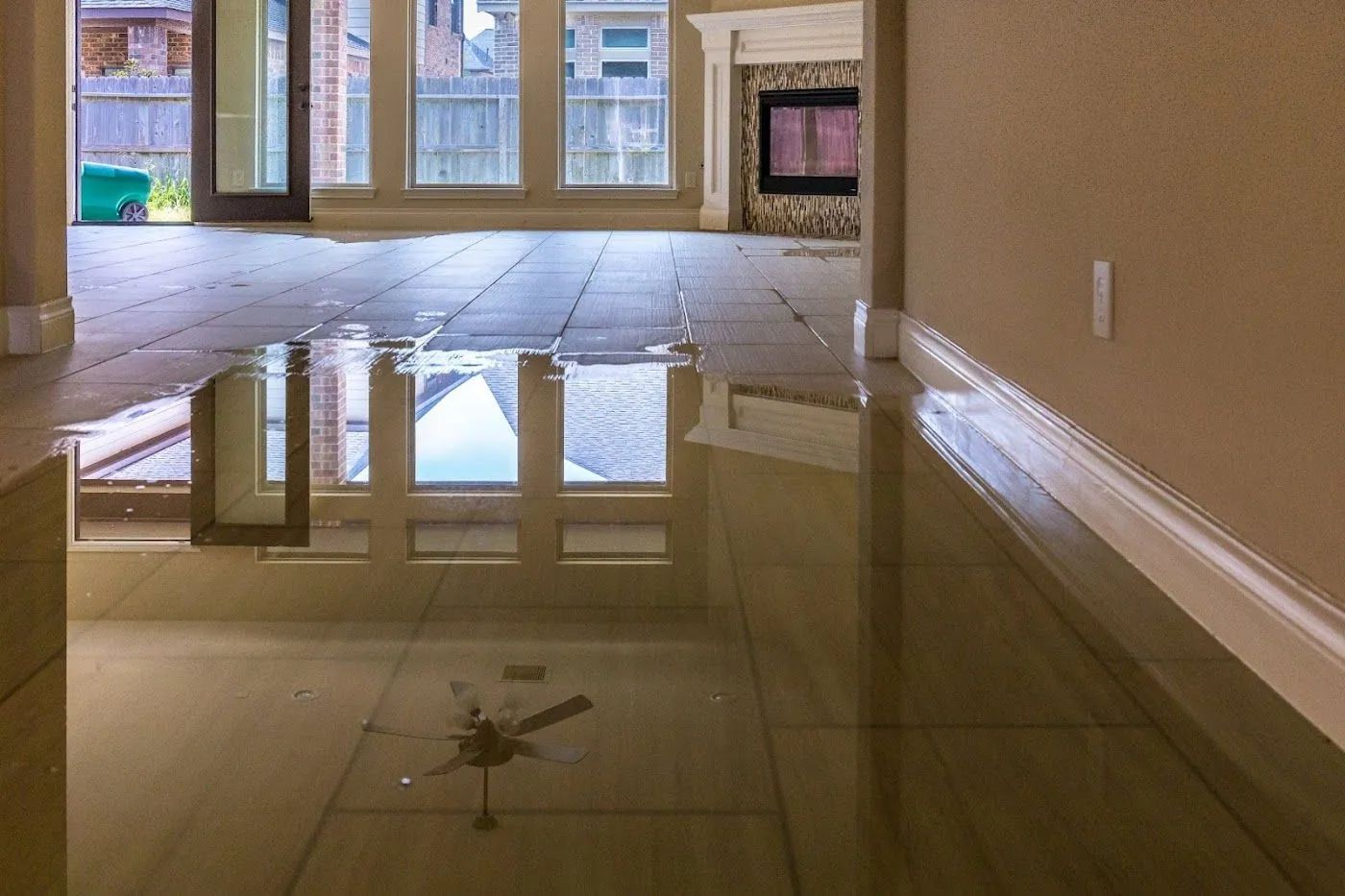
You noticed it on a Tuesday. The dishwasher line had let go under the kitchen sink sometime over the weekend, quiet enough that nobody heard it, and by the time you found the puddle you thought you'd caught it early. You mopped it up, ran a fan for a day, figured that was that. Then the baseboard along the far wall started pulling away from the drywall, just a sliver at first, and two oak boards near the vent tented up at the seam like the floor was trying to breathe. Nothing dramatic happened that week. The leak did.
That gap between "minor spill" and "the floor is lifting" is where most homeowners get caught off guard. The damage isn't sitting on top of your floor. It's inside the wood, and it's been working there since the moment the water arrived.
The Clock Is Already Running
Warped floors and pulling baseboards aren't just a cosmetic problem. They're a sign that wood in your home has been sitting wet long enough to visibly change shape, and that's exactly the environment mold needs. The EPA states plainly that water-damaged materials need to be dried within 24 to 48 hours to prevent mold growth, and once wood holds around 25 percent moisture content or higher for any length of time, conditions are right for it to take hold, according to moisture-meter manufacturer Wagner Meters. Buckled baseboards and cupped flooring usually mean the wood behind them has been sitting well above that threshold for days, not hours.
WARNING: Do not simply caulk or paint over a bulging baseboard to hide it. Sealing the surface traps moisture against wood that's already compromised, and it removes the one early warning sign you had that something is wrong behind the wall.
What a Restoration Crew Actually Does
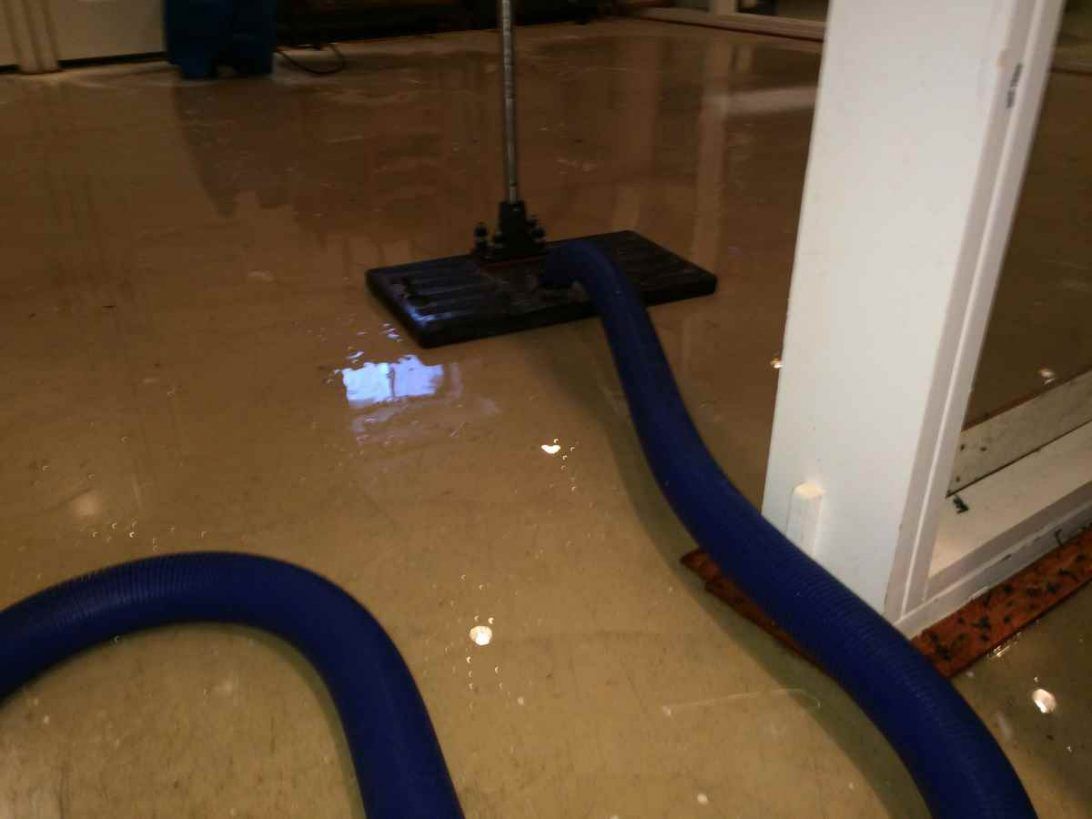
A proper response starts with finding out how far the water actually traveled, not just where it's visible. That means a moisture assessment across the affected room, and usually the rooms next to it, using meters that read moisture content inside walls and subfloors rather than guessing from what's soft to the touch. Once the source is identified and stopped, extraction removes any standing or trapped water fast, because every hour it sits is another hour pushing wood closer to full saturation.
From there, structural drying takes over: industrial air movers and dehumidifiers positioned to pull moisture out of framing, subfloor, and baseboard cavities, not just the room's ambient air. Techs re-check moisture readings throughout the process rather than pulling equipment on a fixed schedule, because wet framing behind a wall can still be well above safe moisture content even after the carpet feels dry. If moisture has been present long enough, that assessment also covers whether mold has started, since it often begins in places you can't see before it shows up anywhere visible.
I've seen homeowners run a box fan for a week and think the problem solved itself. Sometimes it has. More often the surface dries while the framing behind it stays wet, and the warping just takes longer to show up the second time.
Can the Floor Be Saved, or Does It Need to Come Out
This depends heavily on material and how long the wood sat wet. Solid hardwood that's caught within the first day or two, before it's pushed well past the fiber saturation point, can sometimes be dried in place, re-secured, and refinished rather than replaced. Boards that have visibly buckled, separated from the subfloor, or feel soft and spongy underfoot have usually crossed the line from "recoverable" to "needs replacing."
Laminate and engineered flooring with a swollen core rarely comes back once the damage is visible, since the compressed fiberboard that gives it structure doesn't reabsorb its original shape after it's broken down. Subflooring is its own question entirely; plywood that's delaminated at the seams or gone soft needs to come out regardless of what's on top of it, because nothing installed over a compromised subfloor will stay flat for long.
Frequently Asked Questions
Why are my baseboards separating from the wall after a leak?
Baseboards trap moisture behind a caulked seam, so wood swells against that sealed joint as it absorbs leak water, with nowhere to release the pressure. The caulk cracks or bows.
Can buckled hardwood floors be saved, or do they need to be replaced?
It depends on timing and severity. Boards caught early can often be dried, re-secured, and refinished before they fully separate from the subfloor. Once lifted or spongy, replacement is needed.
How long does it take for a floor to buckle after water damage?
Standing water or a major leak can cause visible buckling within a day or two, while a slow, hidden leak may take weeks to show up as cupping and buckling.
What's the difference between cupping and buckling in a wood floor?
Cupping is when a board's edges sit higher than its center, an early sign of uneven moisture between top and bottom. Buckling is more advanced, with boards lifting and separating.
Can humidity alone cause floors to buckle without an active leak?
Yes. Wood constantly balances its moisture content against surrounding humidity. In humid coastal environments, indoor wood often sits at a higher baseline moisture level, leaving less room before cupping begins.
Should I remove buckled floorboards or baseboards myself before calling anyone?
Hold off on removing boards or baseboards yourself. Pulling them up without checking moisture levels first can miss wet framing or subfloor hidden behind the visible damage, delaying proper repair.
What Warped Floors Are Really Telling You
A warped board or a separated baseboard is your house telling you something happened days ago, not something happening right now. By the time the damage is visible, the wood has already absorbed more moisture than it can hold, and the swelling has already reshaped the boards. What happens next depends on how much moisture reached the framing beneath the surface, and how long it sat there before anyone noticed. The visible signs are the last step in the story.
MDM Restoration
has spent 20
years reading these signals in Manhattan Beach, CA homes, where coastal humidity leaves wood with less room to absorb before problems start. Every
buckled floor
and every separated baseboard tells a different story about how far water traveled and how long it sat there. Understanding that story, rather than just covering up what shows on the surface, is what separates a floor that gets properly dried and saved from one that quietly fails again months later.
Wood Is Doing Exactly What Wood Does
Every board in your house, from the subfloor to the baseboard trim, is hygroscopic. That means it constantly trades moisture with the air around it, swelling when humidity rises and shrinking when it drops. Researchers at Oregon State University's forestry extension describe this exchange in terms of moisture content, or MC: the weight of the water inside a piece of wood divided by the weight of the wood itself. Under normal household conditions, that number holds fairly steady. A leak throws it off a cliff.
The saturation point matters
Wood swells as it absorbs water until it hits what's called the fiber saturation point, somewhere around 25 to 30 percent moisture content depending on the species. Below that point, every bit of added moisture pushes the wood fibers apart and the board gets wider. Above it, the wood keeps getting heavier, but it stops swelling further, because the cell walls are already full. That's why a board sitting in standing water for six hours can look almost as swollen as one that sat wet for three days. The damage front-loads fast.
The width, not the length, is what moves
According to that same Oregon State research, a ten-inch-wide board can shrink or swell by close to eight-tenths of an inch across its width as it moves from full saturation down to bone dry. Along its length, the same board barely moves at all, less than a quarter inch over twenty feet. That's why buckling shows up as boards crowding sideways into each other and popping upward, not as gaps opening at the ends of the room.
Cupping Comes First, Buckling Comes After
If you're catching this early, you might notice cupping before you ever see full buckling. Cupping is when the edges of a board sit higher than its center, a subtle dip you'd feel with a bare foot before you'd see it standing up. It's the wood's first response to uneven moisture, usually because the underside near the subfloor is wetter than the top surface exposed to room air.
Buckling is what happens when nobody catches the cupping. The boards keep absorbing water, keep swelling, and eventually run out of room to expand sideways. With nowhere left to go, they push upward and separate from the subfloor entirely, sometimes rising an inch or more off the ground. At that point you're not looking at a finish problem. You're looking at boards that have physically detached from what's holding them down.
Why the Baseboard Tells On the Leak First
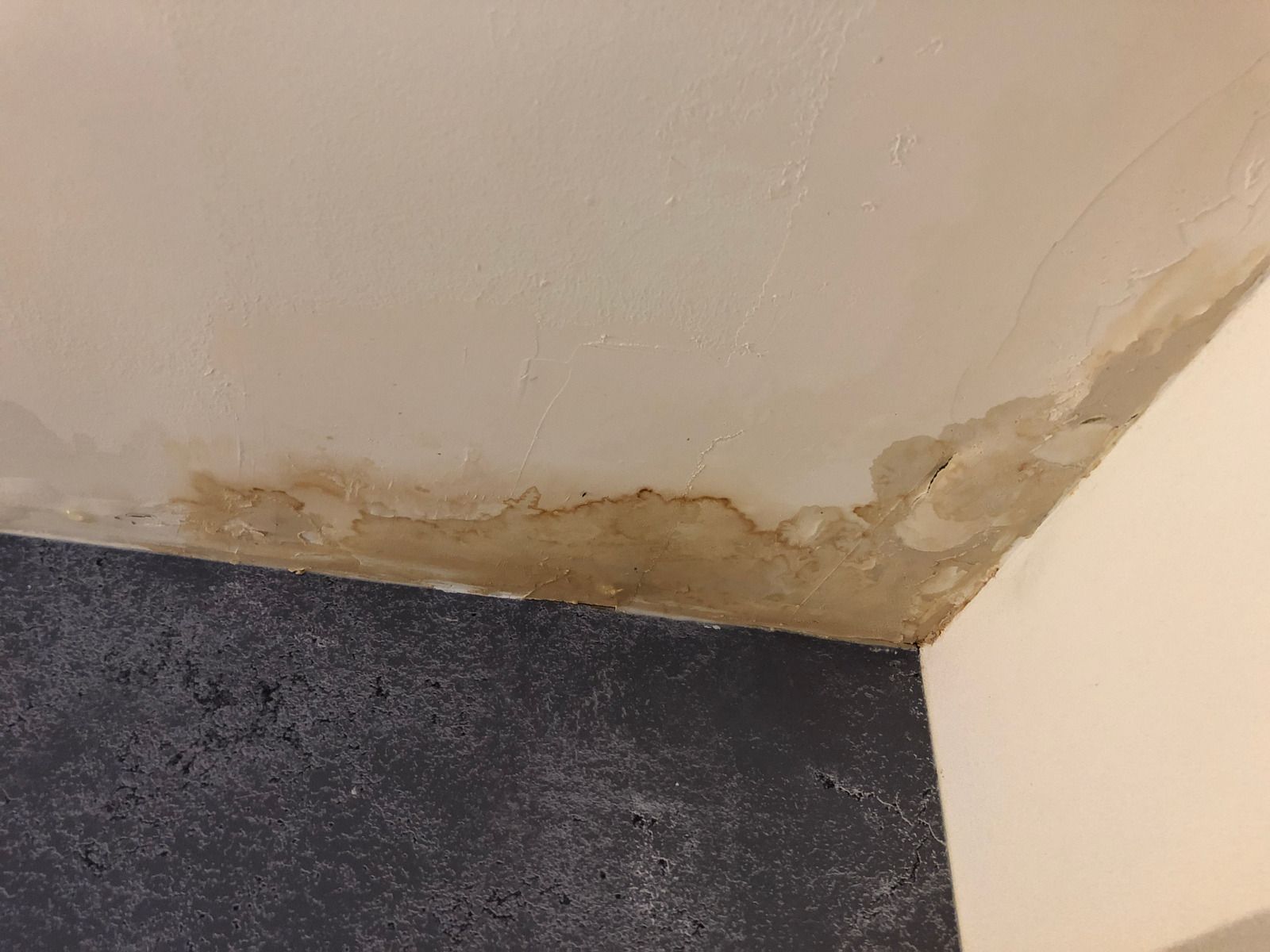
Baseboards sit at the exact spot where a leak likes to travel: down a wall cavity, along the bottom plate, and out across the floor. Homeowners often notice the trim moving before they notice the floor itself, and there's a reason for that. Caulk seals the top edge of most baseboards to the wall, which traps whatever moisture is behind it instead of letting it evaporate. The wood swells against that sealed joint until the caulk line cracks or the board pushes forward, visible as a gap, a bow, or paint that's started to bubble along the bottom edge.
Professional flooring guidance from Bona, one of the largest wood floor product manufacturers, notes that baseboards typically have to come off entirely to properly assess and repair a buckled floor, since the caulked seam hides exactly the moisture reading a technician needs. If your baseboard has separated from the wall even a little, treat it as a signal that the wall cavity behind it is wetter than what you can see on the surface.
What's Happening Under the Surface
The visible warping is only part of the story. Underneath solid hardwood, you've usually got a plywood or oriented strand board subfloor, and underneath laminate or engineered flooring, you've got a compressed wood core, often high-density fiberboard. Both react to standing water, but not the same way.
Plywood Subfloors Swell At The Seams First
Water travels along the edges of each sheet faster than it soaks through the middle, so the telltale sign is a ridge running in a straight line where two subfloor panels meet. That ridge telegraphs straight up through whatever flooring sits on top of it.
Laminate And Engineered Cores Often Don't Bounce Back
Restoration and flooring resources including SERVPRO note that once water reaches the compressed core of a laminate plank, the fibers swell and start to break down, and that process doesn't reverse itself the way solid wood sometimes can. A laminate floor that's buckled from a saturated core is, in most cases, done. Solid hardwood has a better shot, but only if it's dried before the wood spends too long above the fiber saturation point.
TIP: If you catch standing water on a hard floor within the first hour or two, pull up any area rugs and get air moving across the surface immediately with fans. You're racing the clock between "surface moisture" and "moisture that's worked into the wood cells," and that window is shorter than most people expect.
South Bay homes add another layer to this. The marine layer that rolls in most mornings along Manhattan Beach, Hermosa Beach, and El Segundo keeps indoor relative humidity running higher than it would in an inland valley, which means the wood in coastal homes already sits at a higher baseline moisture content before any leak happens. A slow slab leak or a hidden pipe issue in an older beach house has less room to work with before that wood crosses into swelling territory, and it often has help from a foundation that was never built with today's plumbing loads in mind.